
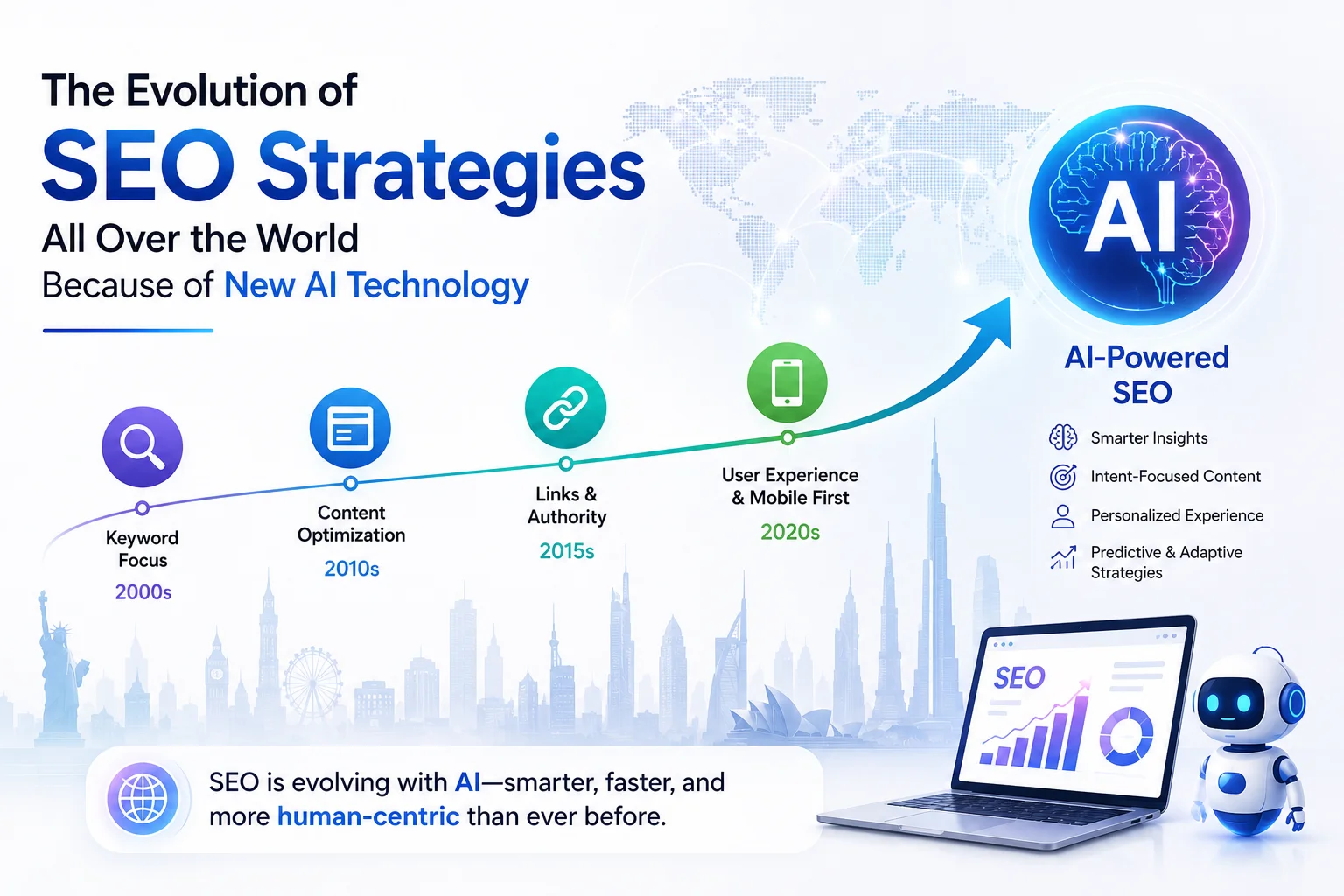
SEO has changed dramatically over the past few years. So, with AI reshaping how people search and how search engines rank content, businesses worldwide are rethinking their strategies entirely.
Because of this, understanding how AI influences SEO today matters more than ever. Below, here’s exactly how these changes are reshaping search, and what it means for your strategy.
First, SEO focuses on improving your website’s visibility in organic search results. So, it involves keyword research, content creation, on-page optimization, and link building, all working to increase quality traffic over time.
Meanwhile, PPC works differently. Instead of earning visibility organically, you pay a fee each time someone clicks your ad. Therefore, PPC delivers immediate results, unlike SEO, which takes real time to build momentum.
1. The Rise of AI-Powered Search
First, search engines increasingly rely on AI to understand queries. So, instead of simply matching keywords, tools like Google’s AI systems now interpret intent, context, and meaning behind every search.
Therefore, ranking well requires more than keyword stuffing. Instead, content needs to genuinely answer what users are actually asking, in a natural, conversational way.
2. Generative AI and Answer Engines
Next, AI-generated answers now appear directly in search results, and increasingly, in chat-based tools people use to research online. So, businesses must optimize for these AI-driven answer engines, not just traditional blue links.
Consequently, structuring content clearly, with direct answers and well-organized headers, helps AI systems accurately understand and cite your content.
3. Voice Search and Natural Language
Meanwhile, voice search continues growing steadily. So, people phrase voice queries more conversationally than typed searches.
Therefore, optimizing for natural, question-based phrases helps capture this growing segment of search traffic. This way, content stays discoverable across both typed and spoken queries.
4. Personalization at Scale
However, AI also enables far more personalized search results. So, search engines increasingly tailor results based on user behavior, location, and history.
As a result, businesses need to think beyond generic rankings. Instead, understanding audience segments deeply helps content resonate with the specific searchers most likely to convert.
5. E-E-A-T Matters More Than Ever
Now, with AI generating so much content, search engines emphasize experience, expertise, authority, and trust more heavily. So, genuinely credible, well-researched content increasingly outperforms generic, AI-mass-produced pages.
Therefore, real expertise, authentic voice, and demonstrated authority matter more in this new landscape, not less.
6. Technical SEO Remains Essential
Finally, despite all these changes, technical fundamentals still matter. So, site speed, mobile-friendliness, and clean structure remain essential for both traditional and AI-driven search.
This way, a strong technical foundation ensures AI systems can actually crawl, understand, and surface your content effectively.
Bringing It All Together
Ultimately, AI hasn’t replaced SEO; instead, it’s transformed it. So, by embracing AI-powered search, generative answer engines, natural language, personalization, and genuine authority, businesses can stay visible in this evolving landscape.
Ready to Evolve Your SEO Strategy for the AI Era?
If your SEO strategy needs to catch up with AI-driven search, CreativeKatta builds forward-thinking strategies designed for both traditional and AI-powered visibility.
Contact CreativeKatta today, and let’s future-proof your search presence together.
Frequently Asked Questions
Q: Has AI made traditional SEO obsolete? A: No, not at all. Because technical fundamentals and quality content still matter, traditional SEO remains essential; AI has simply added new dimensions to consider.
Q: How can businesses optimize for AI-generated search answers? A: Structure content with clear, direct answers and organized headers. So, well-organized, genuinely helpful content is easier for AI systems to understand and cite.
Q: Does AI-generated content rank well in search results? A: Not always. Since search engines increasingly prioritize experience and authority, genuinely researched, credible content often outperforms generic AI-mass-produced pages.



2 Comments
A WordPress Commenter
November 21, 2024Hi, this is a comment.
To get started with moderating, editing, and deleting comments, please visit the Comments screen in the dashboard.
Commenter avatars come from Gravatar.
A WordPress Commenter
July 22, 2026Hi, this is a comment.
To get started with moderating, editing, and deleting comments, please visit the Comments screen in the dashboard.
Commenter avatars come from Gravatar.