
In today’s highly competitive digital world, your website is more than just a virtual address. So, it’s genuinely the face of your brand, the hub of your marketing, and the primary driver of conversions. However, even the best-performing websites eventually become outdated.
Because technology evolves, user expectations change, and SEO best practices keep shifting, a website redesign becomes genuinely essential for businesses that want to grow. Below, here’s exactly when you need a redesign, why it matters, and how to do it effectively.
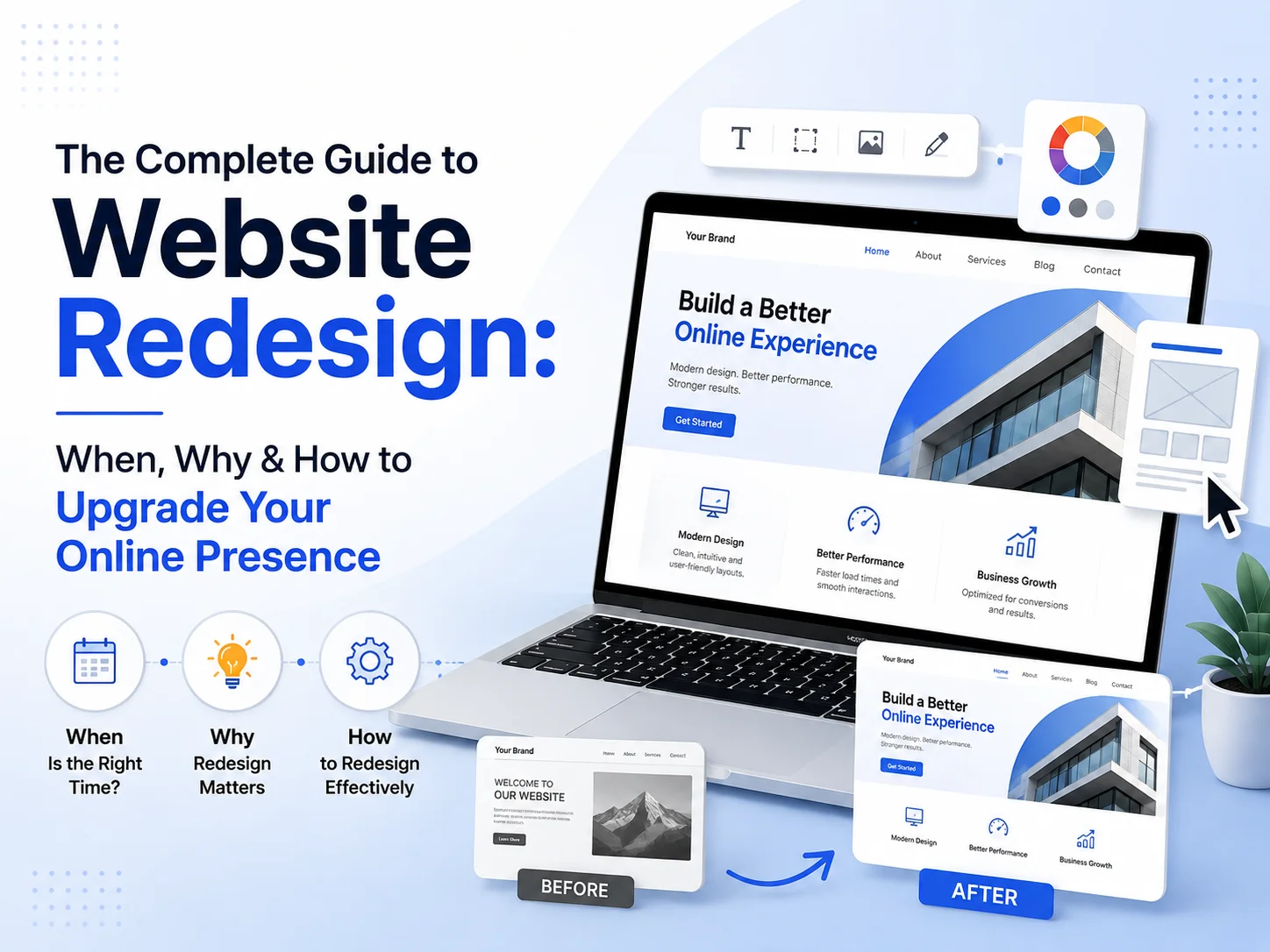
When Do You Need a Website Redesign?
First, a website redesign becomes necessary when your existing site stops matching your business goals or user expectations. So, here are the most common signs.
1. Your Website Looks Outdated
Next, if your competitors have clean, modern, mobile-friendly websites, and yours still uses old layouts or outdated graphics, that’s genuinely a clear signal for a redesign.
2. Low Traffic or Poor SEO Rankings
Meanwhile, Google constantly updates its algorithms. So, when your site isn’t optimized for search intent, Core Web Vitals, or modern keyword strategies, you genuinely lose visibility. Therefore, a redesign with SEO-friendly architecture can help recover rankings.
3. Slow Loading Speed
However, a slow site increases bounce rates, and genuinely kills conversions. So, redesigning your website with performance-optimized code, compressed images, and faster hosting can instantly improve user experience.
4. Not Mobile Responsive
Now, if your site doesn’t adapt to phones and tablets, you genuinely lose more than 60% of potential customers. So, responsive redesign isn’t optional anymore.
5. Poor User Experience
Additionally, users need to find information quickly, and interact effortlessly. So, a website with confusing navigation, long pages, or inconsistent design genuinely needs a UX-focused overhaul.
6. Rebranding or New Business Strategy
Finally, when your brand identity evolves, your website must reflect that new vision, with updated colors, messaging, and design elements.
Why Website Redesign Matters for Business Growth
So, a professional redesign delivers genuinely measurable improvements across multiple areas. Clean layouts, intuitive navigation, and responsive design keep users engaged, leading to higher session duration and conversions. Meanwhile, redesigning with SEO best practices, like structured data and improved technical SEO, boosts search engine visibility too.
Therefore, a modern website communicates trust, authority, and professionalism, helping your business genuinely stand out. Additionally, with optimized CTAs, landing pages, and conversion funnels, a redesigned site boosts leads and revenue. This way, a secure, lightweight, fast-loading website builds confidence, and encourages more customer interactions.
How to Redesign Your Website: Step-by-Step
However, redesigning a website requires a strategic plan, not just new colors and images. So, here’s the complete process.
1. Audit Your Existing Website
First, analyze your site’s performance, SEO score, user behavior, loading speed, and design issues. Therefore, this helps identify exactly what needs improvement.
2. Set Clear Redesign Goals
Next, common redesign goals include improving SEO performance, increasing conversions, enhancing mobile responsiveness, updating design to match branding, and adding new features.
3. Create a New Sitemap and Wireframes
Meanwhile, organize pages for better user navigation. So, wireframes help visualize page layouts, content structure, and user flow.
4. Choose the Right Platform and Technology
However, whether you need WordPress development, custom website design, or e-commerce development, selecting the right stack ensures genuinely long-term scalability.
5. Design a Modern, User-Centric Interface
Now, focus on clean typography, a consistent color palette, high-quality visuals, smooth animations, and accessible design.
6. Develop a Fast, SEO-Friendly Website
Additionally, use lightweight code, optimized images, schema markup, and proper on-page SEO, to genuinely improve ranking potential.
7. Test Across All Devices and Browsers
Meanwhile, check responsiveness, forms, loading speed, navigation, and functionality before launch.
8. Launch and Monitor Performance
Finally, after going live, track metrics like organic traffic, bounce rate, conversions, and engagement, to measure genuine success.
Benefits of a Professional Website Redesign by CreativeKatta
However, partnering with an experienced agency like CreativeKatta ensures your website gets redesigned with a genuine balance of strategy, creativity, and technology. So, you get fully responsive modern designs, conversion-optimized layouts, SEO-friendly development, and faster loading speed.
Therefore, a powerful, visually appealing, growth-focused website is genuinely just one redesign away.
Ready to Redesign Your Website?
If you want a modern, SEO-friendly, high-converting website, CreativeKatta is the right partner. We help businesses transform outdated websites into genuinely powerful digital assets that drive leads and sales.
Get a free website redesign consultation from CreativeKatta today.
Frequently Asked Questions
Q: How do I know if my website genuinely needs a redesign? A: Watch for outdated design, slow loading speed, poor mobile responsiveness, or declining SEO rankings. So, if two or more of these apply, a redesign is likely worth considering.
Q: How long does a full website redesign typically take? A: It varies by scope, but a well-planned redesign usually takes several weeks to a few months, from audit through launch and testing.
Q: Will a website redesign hurt my existing SEO rankings? A: Not if done carefully. Since a proper redesign preserves URL structure and content value while improving technical SEO, rankings typically improve rather than decline.