
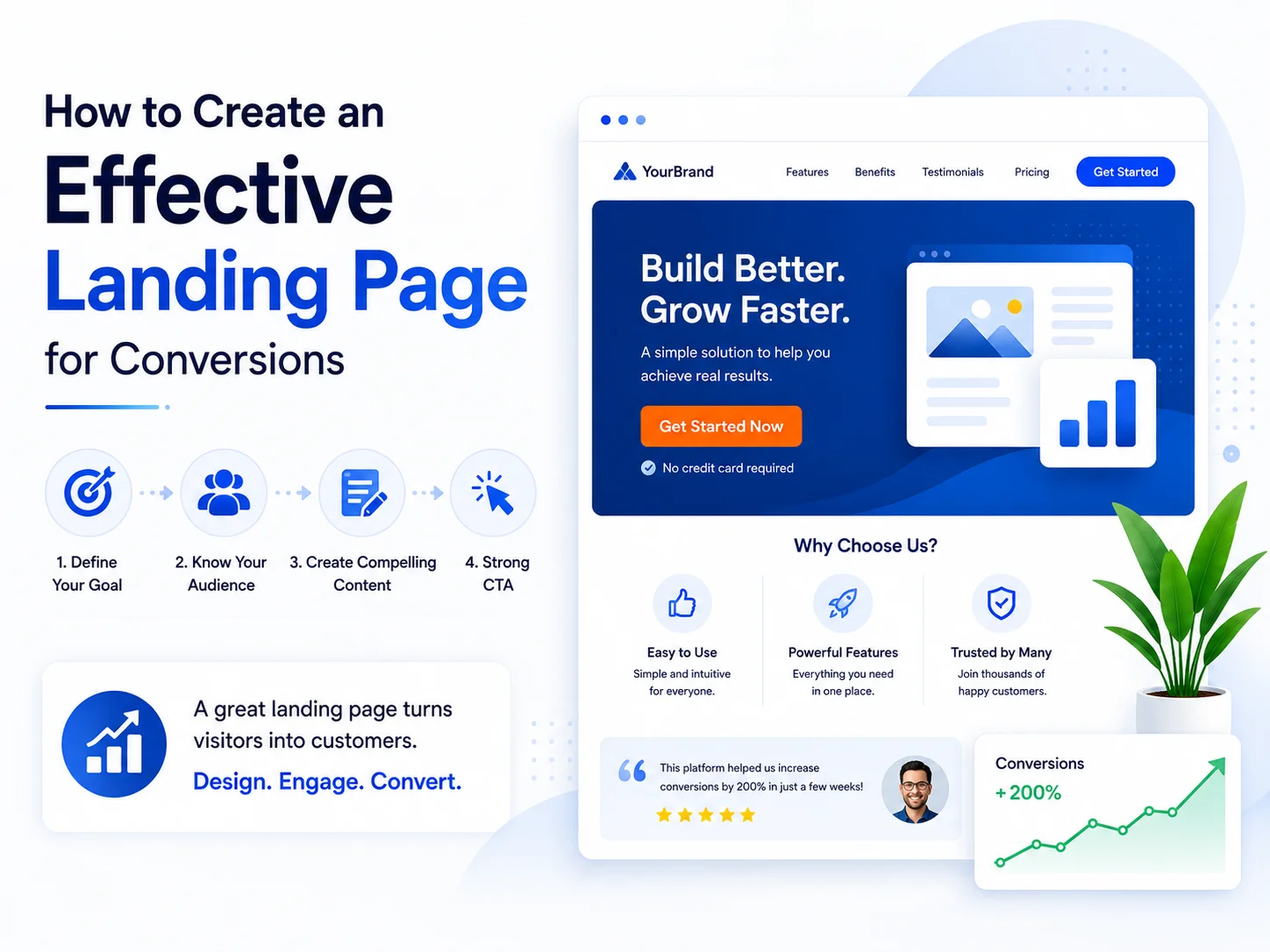
A well-designed landing page can genuinely make or break a visitor’s decision. So, it’s often the difference between someone clicking away, and someone converting instead.
Because of this, effective landing pages get crafted deliberately, to capture attention, convey value, and inspire real action. Below, here are nine key steps to build a high-impact landing page that drives results.
1. Define a Clear Goal
First, every successful landing page starts with a single, focused purpose. So, whether you’re promoting a product, capturing leads, or encouraging sign-ups, clarity matters enormously.
Therefore, this goal should guide every element on the page, from your headline to your final call to action.
2. Craft a Compelling Headline
Next, your headline is the first thing visitors see. So, it needs to grab attention immediately, and communicate your value proposition concisely.
This way, a great headline tells readers exactly what’s in it for them, ideally with genuine urgency or a unique benefit.
3. Use High-Quality Visuals
Meanwhile, people process images far faster than text. So, high-quality photos or videos genuinely support your message, and create a strong first impression.
Therefore, if you’re selling a product, show it in a way that lets visitors see its value instantly.
4. Write Persuasive, Benefit-Driven Copy
However, your copy should clearly outline what visitors actually gain by taking action. Instead of fluff, stay direct, and focus on how your product solves a real problem.
So, use bullet points, concise paragraphs, and bold text. This way, key points stay easy to scan, even for hurried visitors.
5. Create a Strong Call-to-Action
Now, your CTA remains the single most critical element on the page. So, make it stand out with contrasting colors and action-oriented language.
Therefore, phrases like “Get Started Now” or “Claim Your Free Trial” work well. Consequently, ensure your CTA aligns closely with the page’s overall goal.
6. Keep the Layout Simple and Focused
Meanwhile, a cluttered layout overwhelms visitors fast. So, keep the design clean, and limit distractions by focusing only on essentials.
This way, whitespace guides the visitor’s attention naturally toward your CTA, without unnecessary links pulling focus away.
7. Build Trust With Testimonials and Social Proof
Additionally, visitors convert more readily when they see others’ positive experiences. So, incorporate testimonials, reviews, or trust badges to reinforce genuine credibility.
Therefore, adding recognizable client logos or media features can build authority, and instill real confidence in visitors.
8. Optimize for Mobile Devices
However, with mobile browsing continuing to grow, responsiveness isn’t optional. So, ensure every element, including images, text, and CTAs, stays easy to view and interact with on mobile.
This way, a seamless mobile experience can significantly boost your overall conversion rate.
9. A/B Test and Optimize
Finally, even the best-designed landing page benefits from ongoing testing. So, run A/B tests comparing different versions, to see what genuinely performs better.
Therefore, testing variations in headlines, CTAs, and layout reveals exactly what resonates most with your specific audience.
Bringing It All Together
Ultimately, a powerful landing page isn’t just well-designed; instead, it’s strategically crafted to guide visitors toward action. So, by focusing on clear messaging, an engaging layout, and a strong CTA, you maximize your chances of real conversion.
Ready to Create a Landing Page That Converts?
At CreativeKatta, we specialize in designing landing pages that capture attention and drive genuine results.
Contact CreativeKatta today to start your project, and let’s turn your clicks into real customers.
Frequently Asked Questions
Q: What’s the single most important element of a landing page? A: The call-to-action. Because it directs the final decision, a clear, well-placed CTA often determines whether a visitor converts or leaves.
Q: How long should landing page copy be? A: As long as necessary, but no longer. So, prioritize clarity and scannability over length, using bullet points and short paragraphs to keep visitors engaged.
Q: How often should a landing page be A/B tested? A: Continuously, ideally. Since audience behavior shifts over time, ongoing testing helps identify what genuinely resonates, rather than relying on a one-time setup.