

Google’s Core Web Vitals have become one of the most important ranking factors in SEO, shaping how websites deliver user experiences. So, in 2026, these metrics are more than just technical checkboxes; instead, they’re genuine signals of trust, usability, and overall content quality.
Therefore, if you’re aiming to grow your digital presence, you genuinely can’t afford to ignore them.
What Are Core Web Vitals?
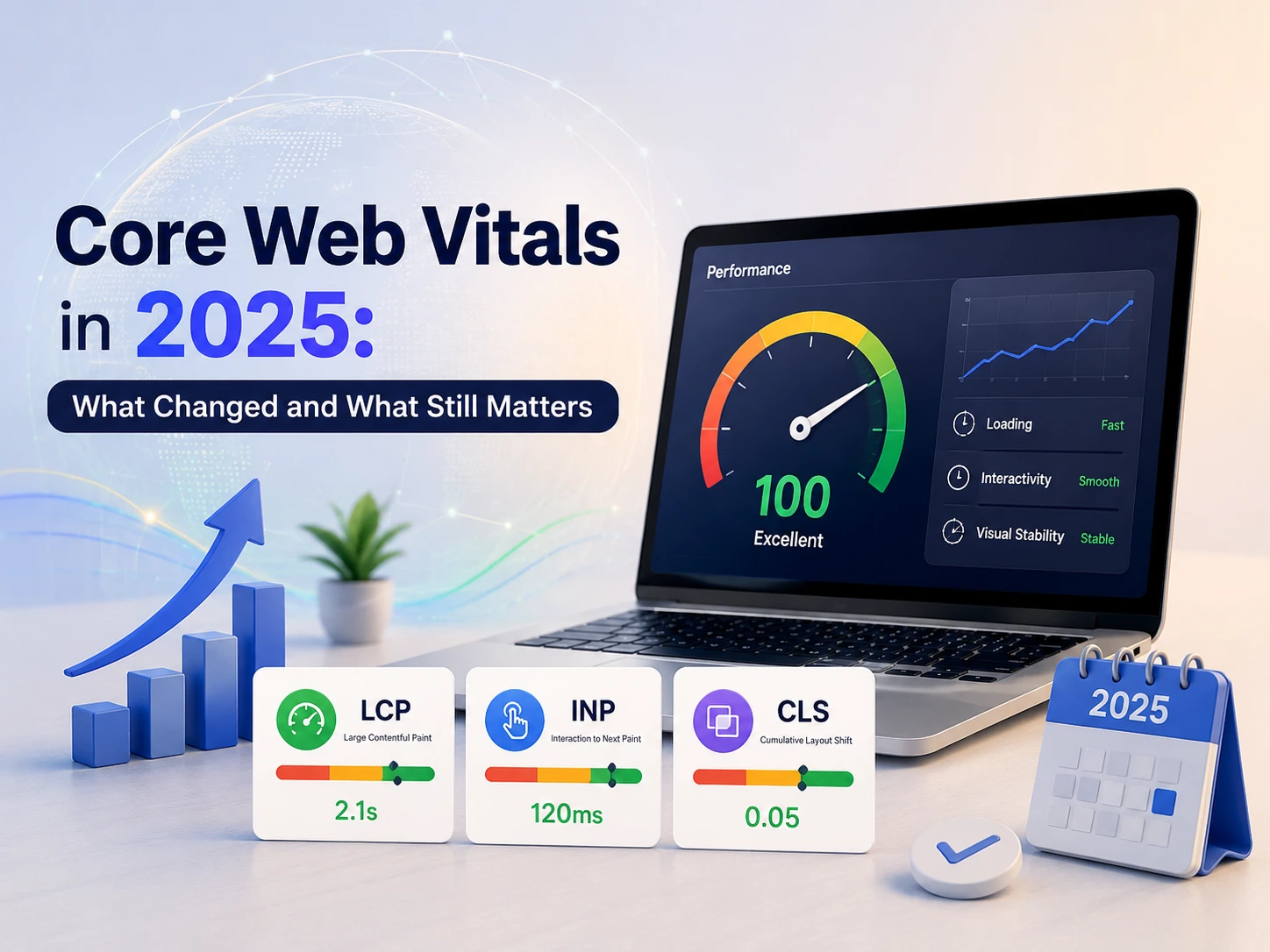
First, Core Web Vitals are a set of performance metrics Google uses to measure page experience. So, they currently focus on three main aspects. Largest Contentful Paint measures how quickly your main content loads. Interaction to Next Paint measures how responsive your site feels during interaction. And Cumulative Layout Shift measures how stable your design stays while loading.
Therefore, First Input Delay has now been fully replaced by Interaction to Next Paint, reflecting Google’s shift toward measuring real-world interactivity.
What Changed Recently?
1. INP Replaced FID
Next, Google retired FID, and made INP the primary metric for interactivity. So, this change ensures websites focus on real responsiveness, rather than just the first click.
2. More Weight on Mobile Page Experience
Meanwhile, with mobile-first indexing now fully dominant, Google’s algorithm gives greater ranking importance to mobile Core Web Vitals scores. So, a fast desktop site genuinely isn’t enough anymore; instead, you must optimize for smartphones.
3. AI-Powered Page Insights
However, Google Search Console now uses AI-based recommendations for Core Web Vitals, offering personalized fixes. Therefore, this makes optimization more genuinely actionable, even for businesses without deep technical expertise.
4. The Core Web Vitals and E-E-A-T Connection
Additionally, while Core Web Vitals measure performance, Google now considers them supporting signals of trustworthiness too. So, a slow, unstable site can undermine credibility, even when your content is genuinely high quality.
What Still Matters?
Now, some fundamentals remain genuinely constant. So, speed still equals visibility, since a faster website leads to better rankings and lower bounce rates. Meanwhile, stability still equals user trust, because preventing layout shifts ensures a smoother browsing experience.
Therefore, responsiveness still equals conversions, since a site that reacts instantly to input keeps visitors genuinely engaged. Additionally, mobile optimization still equals growth, because most traffic now comes from mobile devices. This way, continuous monitoring matters too, since Google updates thresholds regularly, and optimization stays an ongoing process, not a one-time fix.
Why Businesses Should Care
However, Core Web Vitals now tie directly to SEO performance, user satisfaction, and conversion rates. So, a well-optimized site isn’t just about ranking higher; instead, it’s about creating a genuinely frictionless journey for your audience.
Therefore, brands that prioritize Core Web Vitals typically see increased organic traffic, higher dwell time and engagement, improved conversions and sales, and genuinely stronger trust signals within Google’s E-E-A-T framework.
How to Improve Your Core Web Vitals
Now, several practical steps genuinely help. So, use next-gen image formats like WebP and AVIF to speed up LCP, and minimize JavaScript while leveraging server-side rendering for faster INP.
Additionally, implement lazy loading for images and videos, and choose fast, reliable hosting to reduce load time. Therefore, running regular audits with PageSpeed Insights and Lighthouse rounds out a genuinely solid optimization strategy.
Bringing It All Together
Ultimately, Core Web Vitals remain a cornerstone of SEO strategy. So, while the specific metrics keep evolving, the essence stays clear: a fast, responsive, stable website genuinely wins. Google wants businesses to focus on user-first experiences, not just keyword stuffing.
Therefore, if your website isn’t meeting these standards yet, it’s genuinely time to take action.
Ready to Optimize Your Website?
At CreativeKatta, we specialize in website development and SEO solutions that meet the latest Google standards. So, from improving Core Web Vitals to enhancing your brand visibility, we help your business grow online.
Contact CreativeKatta today, and let’s make your website faster, smarter, and genuinely SEO-ready.
Frequently Asked Questions
Q: Is INP really more important than page load speed now? A: Both matter genuinely. Because INP measures interactivity while LCP measures load speed, a well-optimized site needs to perform well across all three Core Web Vitals metrics together.
Q: How often should businesses check their Core Web Vitals scores? A: Regularly, ideally monthly. So, since Google updates thresholds over time, ongoing audits with tools like PageSpeed Insights help catch issues before they affect rankings.
Q: Can Core Web Vitals genuinely affect conversion rates? A: Yes, significantly. Since a slow or unstable site frustrates visitors, strong Core Web Vitals scores often translate directly into better engagement and higher conversions.