
Converting visitors into customers remains the ultimate goal in e-commerce. So, while driving traffic matters, turning that traffic into real sales matters even more.
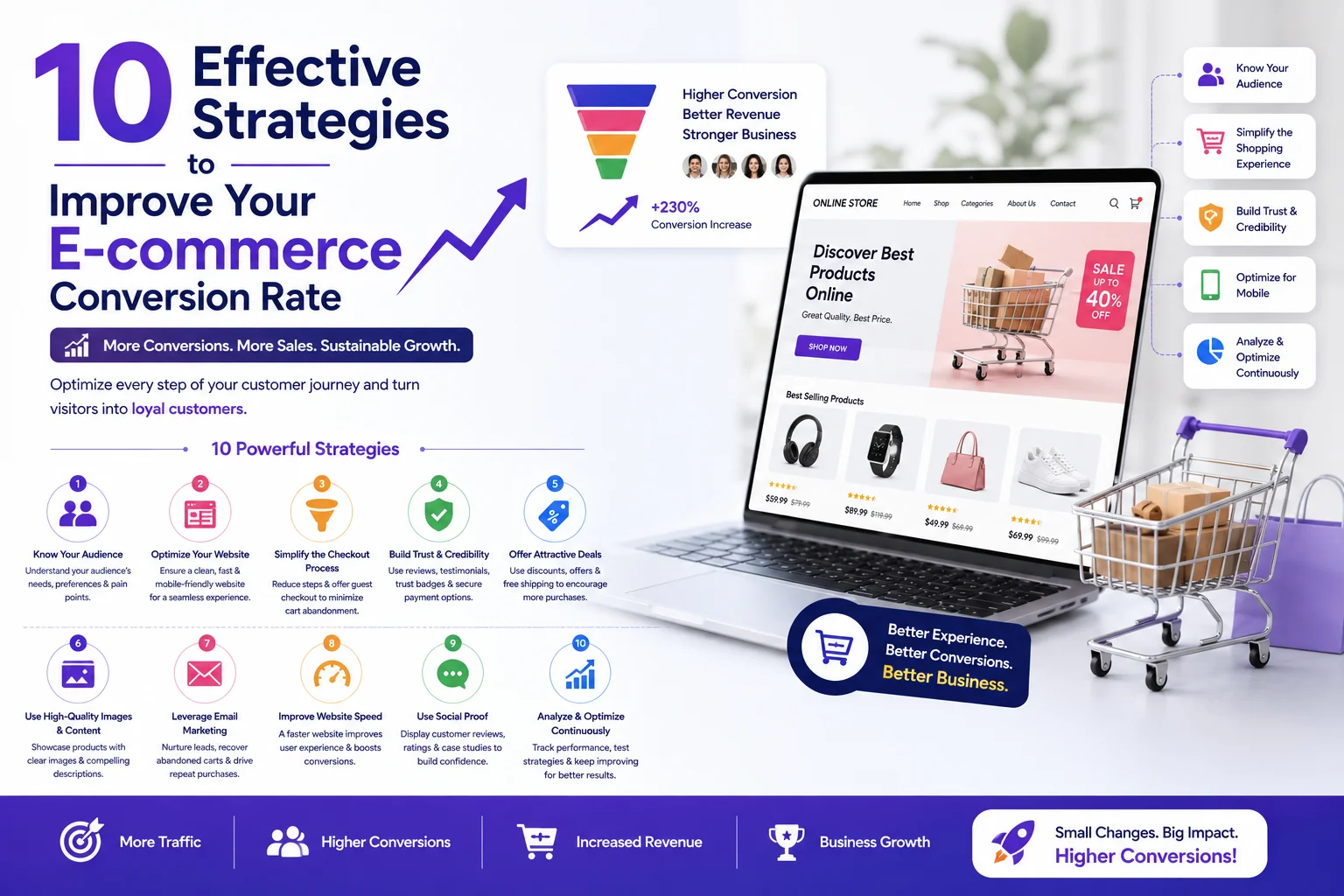
Below, here are ten effective strategies to boost your conversion rate and maximize revenue.
1. Optimize Your Website Speed
First, a slow-loading site turns potential customers away fast. So, even a one-second delay can significantly reduce conversions.
Therefore, compress images, leverage browser caching, and minimize server response time. This way, users stay engaged instead of bouncing.
2. Simplify Your Checkout Process
Next, a complicated checkout drives cart abandonment. Instead, minimize form fields, offer guest checkout, and provide multiple payment methods.
Consequently, a smooth, streamlined checkout experience can dramatically improve your conversion rate.
3. Use High-Quality Images and Videos
Meanwhile, visual content plays a critical role in e-commerce. So, include multiple angles, zoom features, and product videos wherever possible.
This way, customers understand exactly what they’re buying, which builds trust and encourages purchases.
4. Enhance Product Descriptions
However, clear, detailed descriptions genuinely convince buyers. So, highlight key features and benefits, and use bullet points for easy readability.
Therefore, an informative description helps customers decide faster, increasing conversions along the way.
5. Implement Live Chat Support
Now, live chat addresses customer questions in real time. So, having knowledgeable support available reduces friction and builds confidence during the buying process.
As a result, customers feel supported, and they’re more likely to complete their purchase.
6. Leverage Social Proof
Additionally, reviews, testimonials, and user-generated content significantly influence buying decisions. So, display positive ratings and customer photos prominently on product pages.
This way, new visitors gain the trust needed to convert.
7. Offer Limited-Time Promotions
Meanwhile, urgency drives quicker decisions. So, flash sales, countdown timers, and limited-time offers tap into the fear of missing out.
Consequently, this strategy often leads to an immediate boost in conversions.
8. Utilize Email Marketing
Next, email remains a powerful conversion tool. So, send personalized emails for abandoned carts, exclusive discounts, and relevant product recommendations.
Therefore, effective email campaigns re-engage potential buyers and encourage repeat purchases.
9. Optimize for Mobile Users
However, mobile shopping keeps growing steadily. So, ensure your site stays responsive, loads quickly, and offers an intuitive mobile experience.
This way, you capture a larger audience and improve conversions across every device.
10. A/B Test Regularly
Finally, continuous testing drives continuous improvement. So, test headlines, call-to-action buttons, product pages, and layouts to see what actually works.
As a result, regular optimization leads to steady, incremental gains over time.
Bringing It All Together
Ultimately, improving your conversion rate takes ongoing attention and a genuinely customer-centric approach. So, by implementing these ten strategies, you create a better shopping experience, reduce friction, and drive more sales.
Ready to Boost Your Conversion Rate?
If you’re ready to elevate your e-commerce success, CreativeKatta builds data-driven strategies designed to turn browsers into loyal, repeat customers.
Contact CreativeKatta today, and start applying these strategies to watch your conversion rate soar.
Frequently Asked Questions
Q: What’s the single fastest way to improve conversion rate? A: Simplifying checkout usually shows quick results. Because cart abandonment often stems from friction, removing unnecessary steps can lift conversions almost immediately.
Q: How important is mobile optimization for e-commerce conversions? A: Extremely important. Since most shoppers browse and buy from phones today, a slow or clunky mobile experience directly costs you sales.
Q: How often should businesses run A/B tests? A: Continuously, ideally. So, testing one element at a time on an ongoing basis helps identify steady, incremental improvements over the long run.