
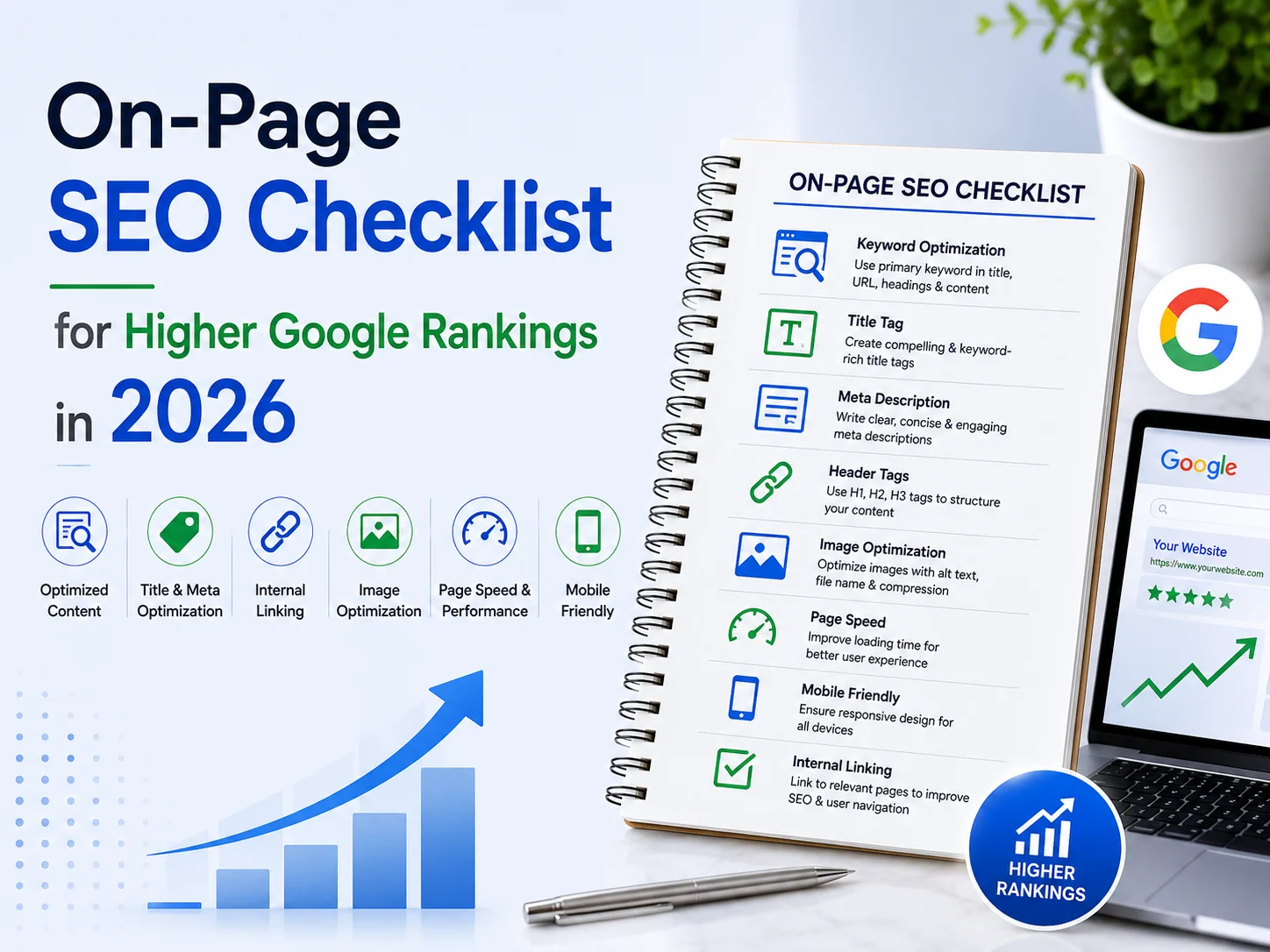
In today’s AI-driven search landscape, ranking on Google is no longer just about keywords. So, on-page SEO genuinely ensures your website communicates clearly with search engines and AI models alike.
Moreover, when done right, it improves user experience, engagement, and conversions. Therefore, following a structured on-page SEO checklist is genuinely essential for higher rankings and sustainable growth.
1. SEO-Friendly Title Tags
First, your title tag is the most critical on-page ranking factor. So, keep titles under 60 characters, and place the primary keyword at the beginning.
Therefore, a compelling, click-worthy title, like “On-Page SEO Checklist for Higher Google Rankings,” genuinely drives more clicks.
2. Optimized Meta Descriptions
Next, meta descriptions don’t directly impact rankings, but they significantly improve click-through rate. So, use transition words like “discover,” “improve,” and “boost,” and keep the description within 140 to 160 characters.
Therefore, adding a benefit-driven message helps convince searchers to genuinely click through.
3. Proper Heading Structure
Meanwhile, headings help both users and search engines understand content flow. So, use only one H1, and include keywords naturally in your H2s and H3s.
As a result, this maintains a logical hierarchy, and your content becomes genuinely easier to scan and AI-friendly.
4. Keyword Placement and Semantic SEO
However, rather than keyword stuffing, focus on context and intent instead. So, use your primary keyword within the first 100 words, and add related terms and synonyms naturally.
Therefore, writing naturally for both humans and AI helps your content genuinely rank in Google AI Overviews and LLM search results.
5. High-Quality, Readable Content
Now, content readability genuinely impacts rankings too. So, keep paragraphs short, two to three lines, use at least 30% transition words, and add bullet points and examples where helpful.
Consequently, users stay longer on your page, which genuinely improves dwell time.
6. Internal Linking Strategy
Additionally, internal links guide both users and crawlers. So, link to relevant service pages and blogs, using keyword-rich anchor text, while avoiding over-linking.
Therefore, this approach genuinely improves your site’s authority organically over time.
7. Image Optimization for SEO
Meanwhile, visual content needs optimization too. So, compress images for faster loading, use descriptive alt text, and name files with relevant keywords.
Therefore, this enhances both page speed and accessibility at once.
8. Mobile-First and Page Speed Optimization
However, since Google uses mobile-first indexing, ensure your design stays fully responsive. So, improve your Core Web Vitals, and minimize scripts and heavy plugins.
Therefore, a genuinely fast site directly boosts both rankings and conversions.
9. Schema Markup and Structured Data
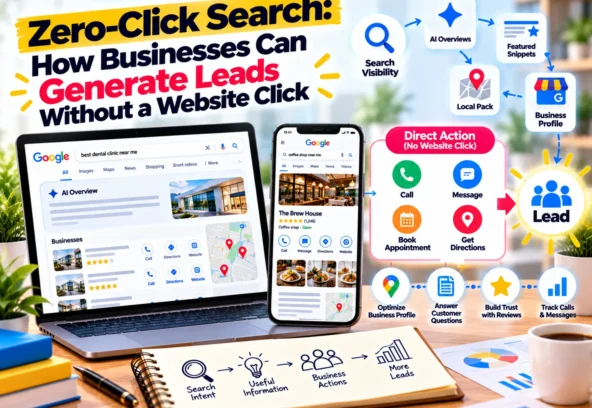
Now, to stand out in search results, add FAQ schema, and use article and breadcrumb schema too. So, improving your eligibility for rich results genuinely increases visibility in zero-click searches.
10. Clear CTAs and Conversion Optimization
Finally, SEO traffic must genuinely convert. So, place CTAs strategically, use action-driven language, and keep forms simple and fast.
Bringing It All Together
Your website shouldn’t just look good; instead, it should rank, engage, and convert. So, following this checklist consistently helps ensure your site achieves all three.
SEO-Optimized Website Development by CreativeKatta
At CreativeKatta, we build SEO-optimized websites, LLM-friendly content architecture, fast, mobile-first designs, and conversion-driven user experiences.
Looking to improve your Google rankings? Get an SEO-ready website developed by CreativeKatta today, and turn traffic into real business growth.
Frequently Asked Questions
Q: What is on-page SEO? A: On-page SEO refers to optimizing content, structure, and HTML elements to improve search rankings. So, it covers everything from title tags to internal linking.
Q: How often should on-page SEO be updated? A: Ideally every six to twelve months, or after major algorithm updates. Because search behavior and ranking factors shift over time, periodic reviews keep your content genuinely current.
Q: How long does on-page SEO take to show results? A: Results typically appear within four to eight weeks, depending on competition. So, patience matters, since search engines need time to recrawl and reassess your pages.