
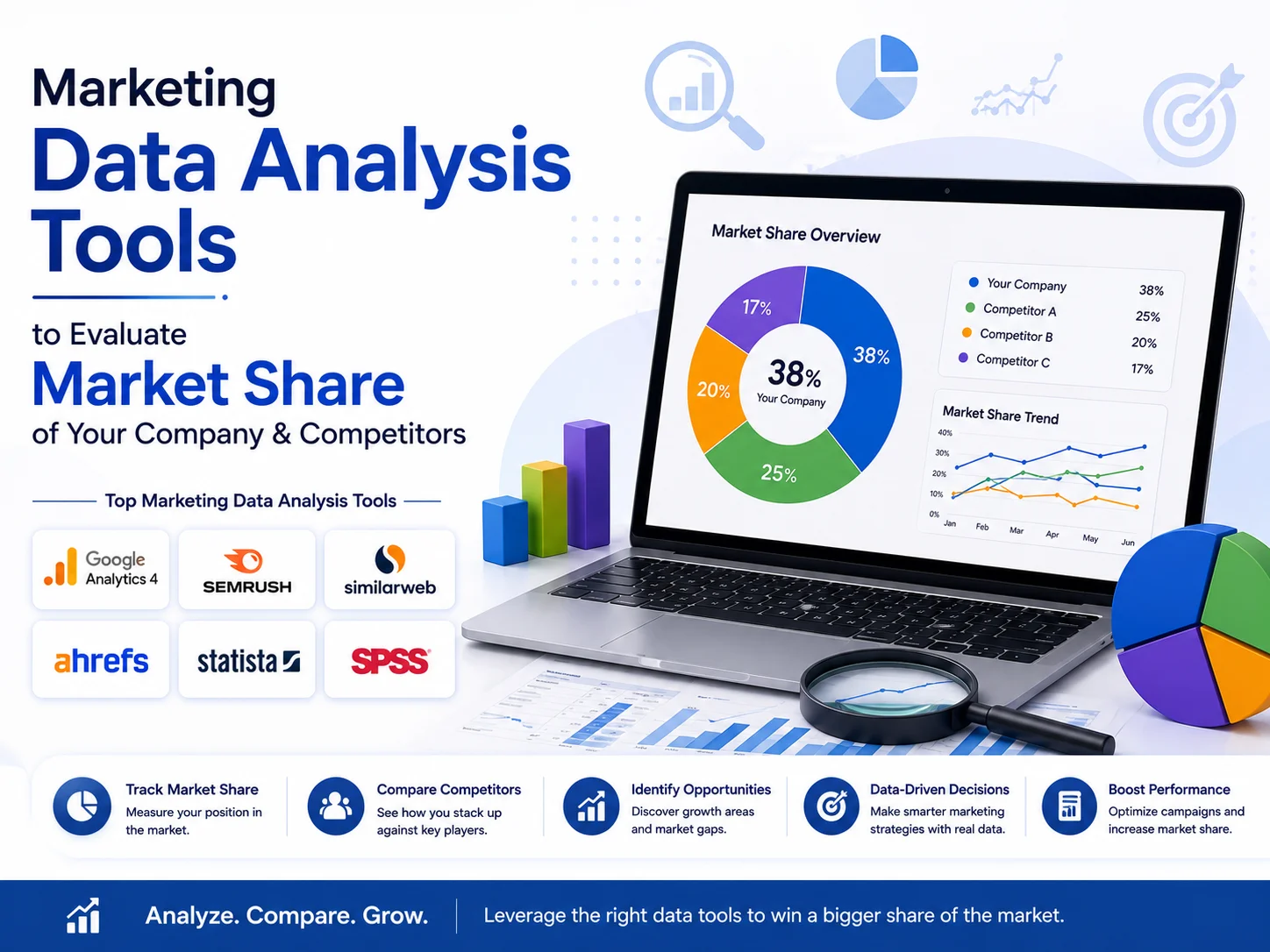
Understanding your market position takes more than guesswork. So, the right data analysis tools reveal exactly where your company stands, and where competitors are gaining ground.
Because of this, choosing the right tools matters enormously. Below, here are eight marketing data analysis tools to help you evaluate market share accurately.
1. Google Analytics
First, Google Analytics reveals real insight into your website traffic and audience behavior. So, comparing your traffic trends against industry benchmarks helps gauge relative visibility.
Therefore, while it won’t show competitor data directly, it establishes a genuine baseline for your own digital performance.
2. SEMrush
Next, SEMrush offers detailed competitive intelligence. So, it reveals competitor keyword rankings, ad spend, and organic traffic estimates.
Consequently, this data helps you understand where competitors are winning search visibility, and where real opportunities remain.
3. Similarweb
Meanwhile, Similarweb estimates website traffic and engagement across entire industries. So, comparing your traffic estimates against competitors offers a genuine sense of relative digital market share.
This way, you gain perspective on how your online presence stacks up within your specific industry.
4. Statista
However, Statista provides broader market data and industry reports. So, it’s genuinely useful for understanding overall market size and growth trends.
Therefore, combining Statista’s industry-level data with your own company figures helps calculate your actual market share percentage.
across entire industries. So, comparing your traffic estimates against competitors offers a genuine sense of relative digital market share. This way, you gain perspective on how your online presence stacks up within your specific industry.5. Nielsen
Now, Nielsen specializes in consumer behavior and retail market data. So, for product-based businesses, it offers real insight into category performance and market share within specific sectors.
This way, Nielsen data helps validate assumptions with genuinely reliable, industry-standard measurement.
6. Social Media Analytics Tools
Additionally, tools like Sprout Social and Brandwatch reveal social share of voice. So, comparing mentions, engagement, and sentiment against competitors offers a genuine picture of brand visibility.
Therefore, this social dimension often reflects broader market perception, even before it shows up in sales figures.
7. Customer Surveys and Feedback Tools
Meanwhile, tools like SurveyMonkey and Typeform let you gather direct customer insight. So, asking customers which brands they consider reveals genuine perception, not just measurable traffic.
This way, survey data adds real context that purely quantitative tools often miss.
8. CRM and Sales Data
Finally, don’t overlook your own internal data. So, CRM platforms like Salesforce or HubSpot reveal genuine trends in win rates, deal sizes, and customer acquisition over time.
Therefore, tracking these metrics against industry benchmarks helps you understand your actual competitive position, not just estimates.
Bringing It All Together
Ready to Turn Data Into a Winning Strategy?
If you’re ready to understand your true market position, CreativeKatta helps brands translate competitive data into strategies that actually drive growth.
Contact CreativeKatta today, and let’s build a strategy grounded in real market insight.
Frequently Asked Questions
Q: What’s the easiest way to start measuring market share? A: Combine your own sales data with industry reports from sources like Statista. So, this comparison gives a reasonable starting estimate before layering in more detailed tools.
Q: Can social media data really reveal market share? A: Indirectly, yes. Because share of voice often reflects brand visibility, tracking mentions and engagement against competitors offers a useful proxy for market perception.
Q: How often should market share be reassessed? A: Quarterly is a reasonable rhythm. So, regular reassessment helps catch shifts in competitive position before they become significant threats.