
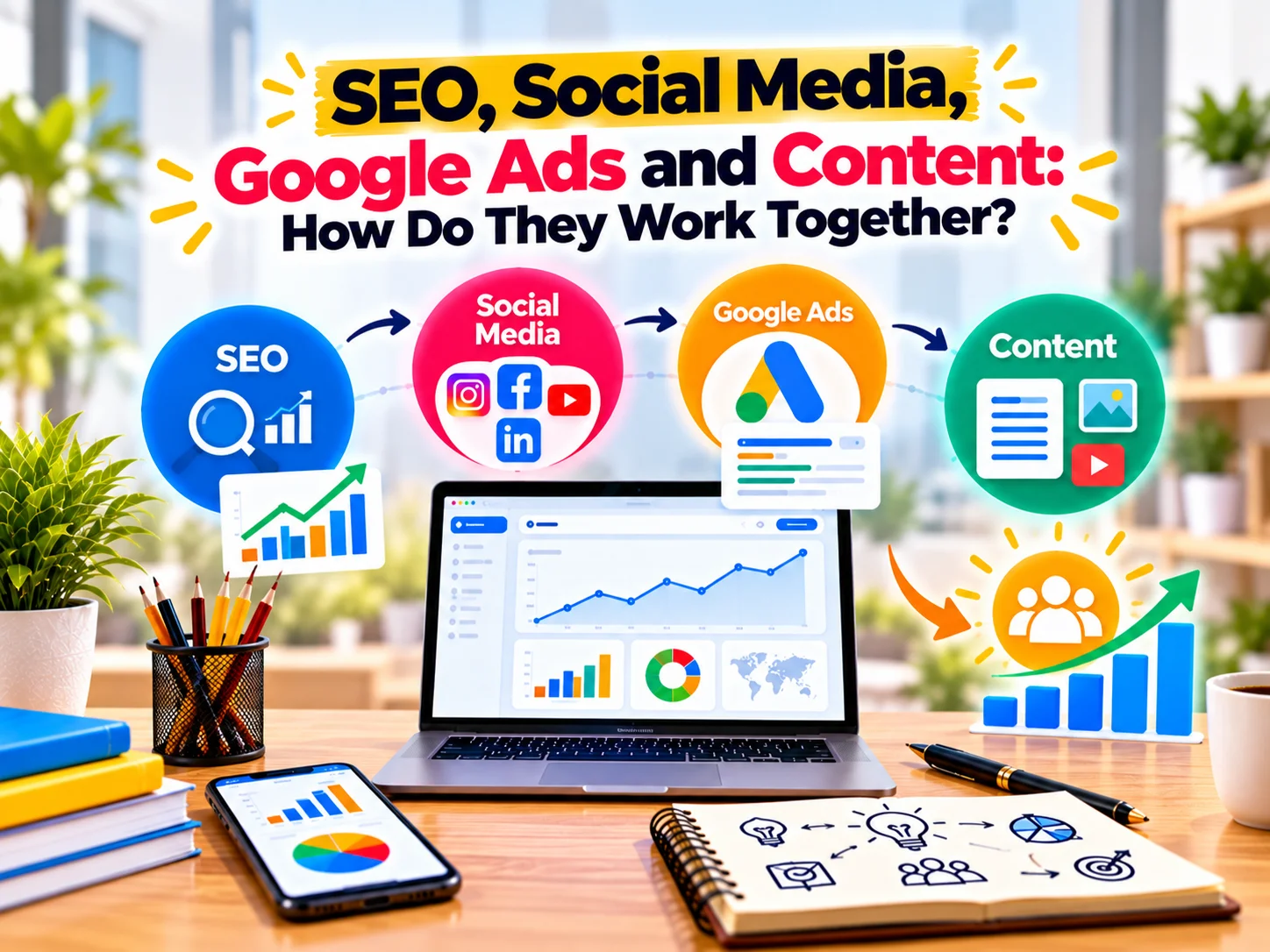
Building a strong online presence requires more than a website or regular social media posts. Businesses need a digital marketing strategy that attracts the right audience and converts visitors into customers. However, when SEO, social media, Google Ads and content marketing operate separately, businesses may miss valuable growth opportunities.
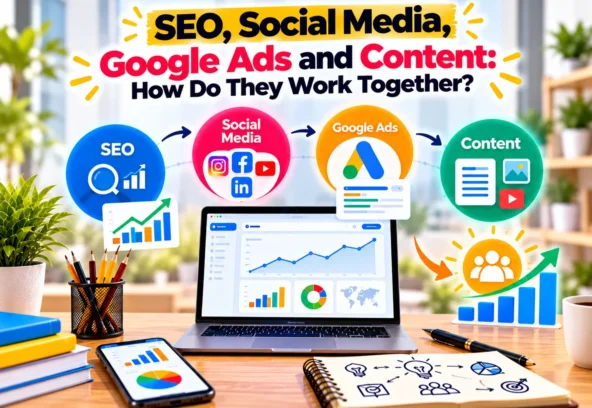
The solution is to connect these channels through a shared strategy. SEO improves organic visibility, social media builds brand awareness, Google Ads reaches potential customers through paid campaigns, and content marketing provides useful information. Together, these activities help businesses strengthen their online presence and generate relevant enquiries.
How Do SEO, Social Media, Google Ads and Content Marketing Work Together?
SEO, social media, Google Ads and content marketing support different stages of the customer journey. SEO attracts organic traffic, social media builds awareness, Google Ads delivers targeted paid visibility, and content marketing educates potential customers. When these channels work together, businesses can improve their reach, engage relevant audiences and create more opportunities for leads and sales.
Understanding the Four Digital Marketing Channels
Search Engine Optimisation (SEO)
SEO helps websites appear in relevant organic search results. It includes keyword research, technical improvements, on-page optimisation and useful content.
For example, a business searching for an SEO agency in Bangalore may discover a well-optimised service page through Google.
Explore CreativeKatta’s SEO services to learn how SEO can support organic visibility.
Social Media Marketing
Social media marketing helps businesses build awareness, engage audiences and showcase their expertise through relevant posts, videos and campaigns.
Additionally, businesses can share blog articles and service updates to encourage website visits and strengthen brand recognition.
Google Ads
Google Ads helps businesses reach potential customers through paid advertising. It can generate visibility for relevant searches without waiting for organic rankings to improve.
However, campaign success depends on keyword targeting, advertising budget, landing page quality and conversion tracking.
Learn more about CreativeKatta’s Google Ads services.
Content Marketing
Content marketing involves creating useful blog articles, videos, graphics, guides and case studies that answer customer questions.
Moreover, the same content can support SEO, social media and paid campaigns, helping businesses maintain consistent communication across channels.
How Do These Channels Work Together?
Each channel becomes more valuable when it supports the others.
- SEO + Content Marketing: Create useful, search-optimised articles that answer customer questions and attract relevant organic traffic.
- Social Media + Content Marketing: Repurpose blogs into social posts, videos and carousels to reach audiences across different platforms.
- Google Ads + Content Marketing: Direct paid traffic to relevant landing pages that explain services and encourage enquiries.
- SEO + Google Ads: Use paid campaign insights to identify promising search terms and inform organic content planning. Google Ads does not directly improve organic rankings.
- Website Design + Digital Marketing: Provide clear information, a good user experience and simple enquiry options to help turn visitors into leads.
Therefore, businesses should coordinate their campaigns instead of treating every marketing channel as a separate activity.
SEO vs Social Media vs Google Ads vs Content Marketing
| Channel | Main Purpose | Key Benefit |
|---|---|---|
| SEO | Improve organic search visibility | Long-term organic traffic opportunities |
| Social Media | Build brand awareness and engagement | Audience interaction and content discovery |
| Google Ads | Reach users through paid campaigns | Targeted visibility and measurable campaigns |
| Content Marketing | Educate and engage potential customers | Supports SEO, social media and advertising |
The right combination depends on your business goals, target audience, budget and competition.
How to Build an Integrated Digital Marketing Strategy
Step 1: Define Your Goals
Identify whether you want more website traffic, qualified leads, sales or brand awareness. Clear goals help you select the right channels.
Step 2: Understand Your Audience
Research customer questions, search behaviour and purchasing needs. Use these insights to plan keywords, social media posts and advertising campaigns.
Step 3: Create a Connected Content Plan
Develop blog articles and repurpose them iketing activities.
Step 4: Optimise Landing Pages
Ensure that advertisements and social media links direct visitors to relevant pages with clear information and calls to action.
Step 5: Measure and Improve
Track organic clicks, social engagement, advertising conversions and qualified enquiries. Then use the results to improve your strategy.
Common Digital Marketing Mistakes to Avoid
- Focusing only on traffic: Measure qualified leads and conversions, not just visits.
- Publishing without a strategy: Create content that answers real customer questions.
- Running ads without relevant landing pages: Match page content to the advertisement.
- Ignoring brand consistency: Maintain consistent messaging and visual identity across platforms.
- Failing to measure results: Review campaign performance and make data-informed improvements.
Frequently Asked Questions
How do SEO and social media work together?
SEO attracts organic search traffic, while social media helps distribute content and build brand awareness. Together, they can increase content discovery and website visits.
Can Google Ads improve SEO rankings?
No. Google Ads does not directly improve organic rankings. However, campaign data can provide useful insights for keyword research and content planning.
Why is content marketing important for digital marketing?
Content marketing educates customers, demonstrates expertise and provides material for SEO, social media and paid advertising.
Which digital marketing channel is best for small businesses?
It depends on your goals and budget. SEO can support long-term visibility, while Google Ads may help businesses seeking quicker paid exposure. Social media and content marketing support awareness and engagement.
How can businesses measure digital marketing success?
Track organic traffic, relevant enquiries, conversion rates, cost per lead and revenue. These metrics help businesses understand whether their marketing activities are delivering meaningful results.
SEO, social media, Google Ads and content marketing work best when they support a shared business goal. SEO attracts organic visitors, social media builds awareness, Google Ads reaches targeted audiences, and content marketing helps customers make informed decisions.
By connecting these channels with a well-designed website and consistent messaging, businesses can improve their online presence and create more opportunities for growth.
Ready to strengthen your digital presence? Explore CreativeKatta’s digital marketing services and discover how an integrated strategy can support your business goals.